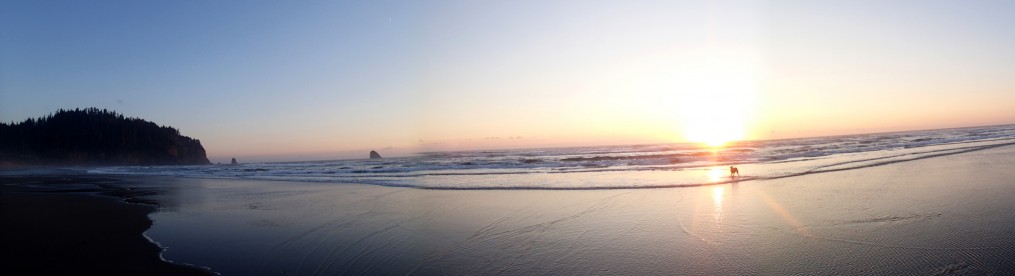
Friday July 29, 2011
Dad and I headed off to see the Shambhala Mountain Center.
Shambhala Mountain Center is a mountain valley retreat located on 600 acres in northern Colorado. Since 1971 the Center has offered hundreds of programs on Buddhist meditation, yoga and other contemplative disciplines. Tamed by over thirty years of use as a contemplative retreat, Shambhala Mountain Center is a place where one of the basic truths of Buddhism—that people can be profoundly open to the wisdom of the present moment—is always readily available. http://shambhalamountain.org
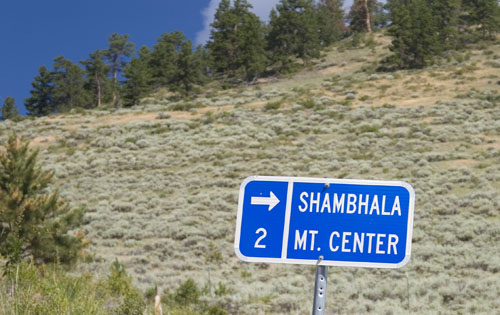
The road to Shambhala
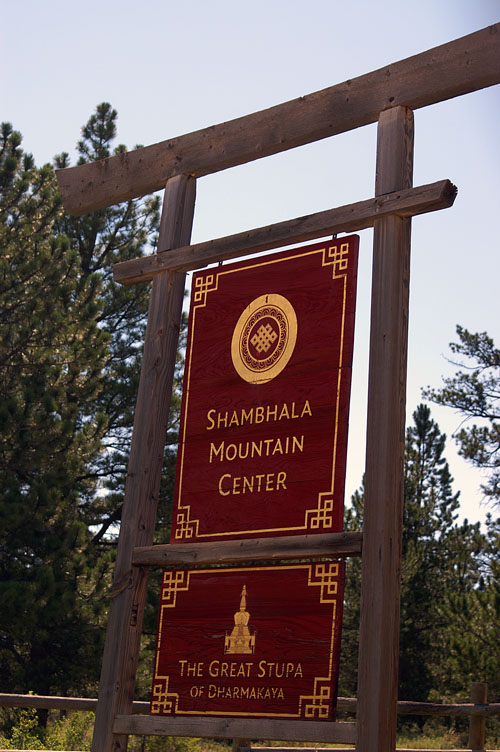
The entrance to the Shambhala Mountain Center
He wanted to visit the The Great Stupa of Dharmakaya.

Rising among wooded hillsides, The Great Stupa of Dharmakaya crowns a meadow at the upper end of the main valley of the Shambhala Mountain Center. Construction of The Great Stupa was initiated in 1988 and the monument was consecrated in August 2001.
The Shambhala Mountain Center was designed to bring the energy of the Stupa into the lives of the people who come to visit. Like the great centers of learning and practice of the past, the plan for this mountain retreat facility was laid out according to the tradition of living in accordance with the energetic forces of the natural environment.
The Stupa is sited between two powerful landforms—the promontory, known as Marpa Point, and the steep cliffs opposite it. The power of the Stupa balances and brings together the energies of these surrounding landforms; at the same time, it embodies the wisdom and blessings of the Vidyadhara and of the Buddhist and Shambhala lineages.
The Stupa has become the heart of the Shambhala Mountain Center. Stupas are said to promote harmony, prosperity, longevity, good health, peace, and freedom from ignorance. They subdue fear, corruption, and pollution, and bring blessings to the environment in which they are built, to those who build them, and to those who visit and venerate them. In this way, they ensure that the living quality of the Buddhist teachings will always be available.
It has long been the tradition that wherever the teachings of the Buddhas have been revered and practiced, communities of followers have built reliquary monuments known in Sanskrit as stupas and as chörtens in Tibetan. And wherever they have been built, they have been regarded as sacred, for like religious /img and scriptures, they represent aspects of enlightenment.
—His Holiness the Fourteenth Dalai Lama http://www.shambhalamountain.org/stupa.html
The bad news was they did not let dogs on the grounds. I wish I could have gone with him to see the Stupa but had to wait in the car.
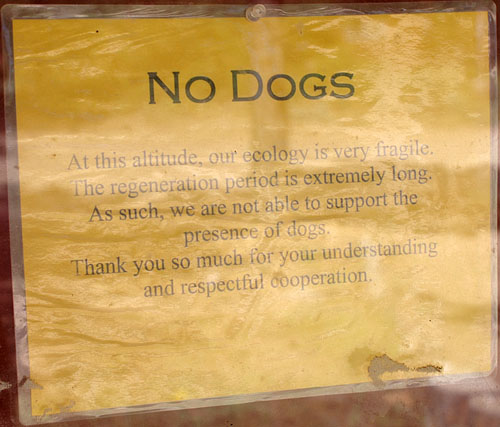
No Dogs!
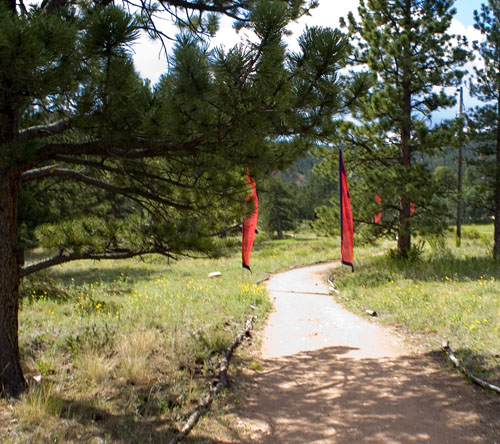
Path to The Great Stupa of Dharmakaya
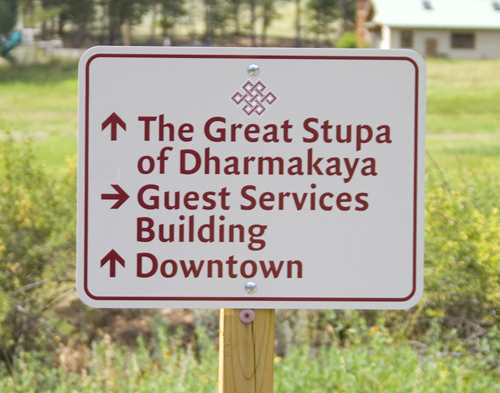
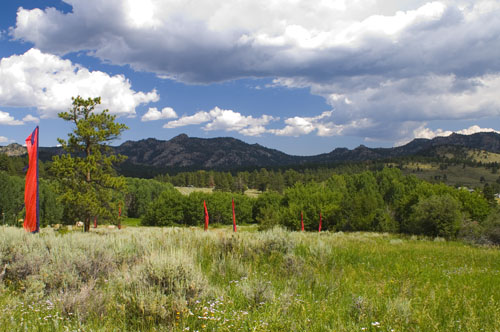
Path to The Great Stupa of Dharmakaya
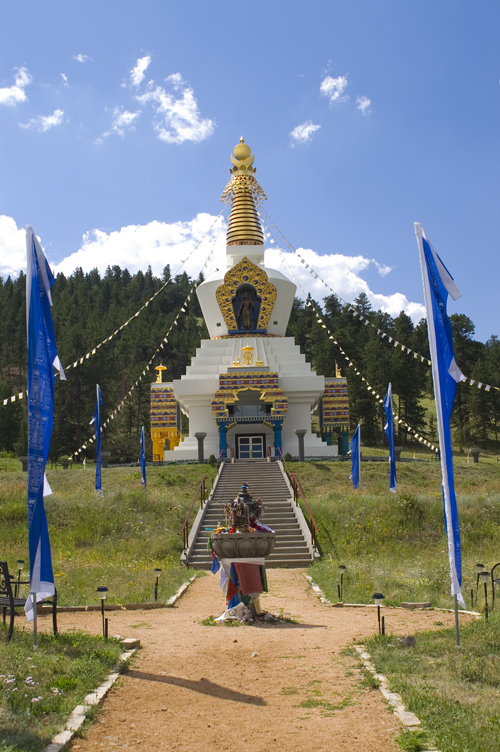
The Great Stupa of Dharmakaya
 Maddy's Big Little Life